
Wallet Risk Protection: Detect & Prevent Fraud
Catch the ring, not the wallet
Every rule you already have re-runs across the whole group - total gain, deposit addresses, platforms hit, win streaks. Individually each account passes. Together they're obviously a ring, and now you can act on it.
Know which fraud you're looking at,
not just that something's off.
Each flag arrives named - signup-bonus abuse, a referral ring, pass-through laundering. Your analyst starts from a fraud type with the evidence attached, instead of a score they have to reverse-engineer.
Signup-bonus abuse
Accounts created to collect the incentive and exit.
Referral abuse
Self-referral rings and farmed referral chains.
Arbitrage exploitation
Sustained positive gain that the house edge says shouldn't happen.
Rakeback wash trading
Volume generated purely to harvest rakeback.
Pass-through laundering
Value in, value out, minimal play in between.
Multi-account farming
One actor, many accounts, shared funding and infrastructure.
Give your analyst a reason, not a number
A flag your team can't verify is a flag they won't use.


Four stages, one verdict
Surface
On-chain rules flag a candidate wallet from public activity alone.
Expand
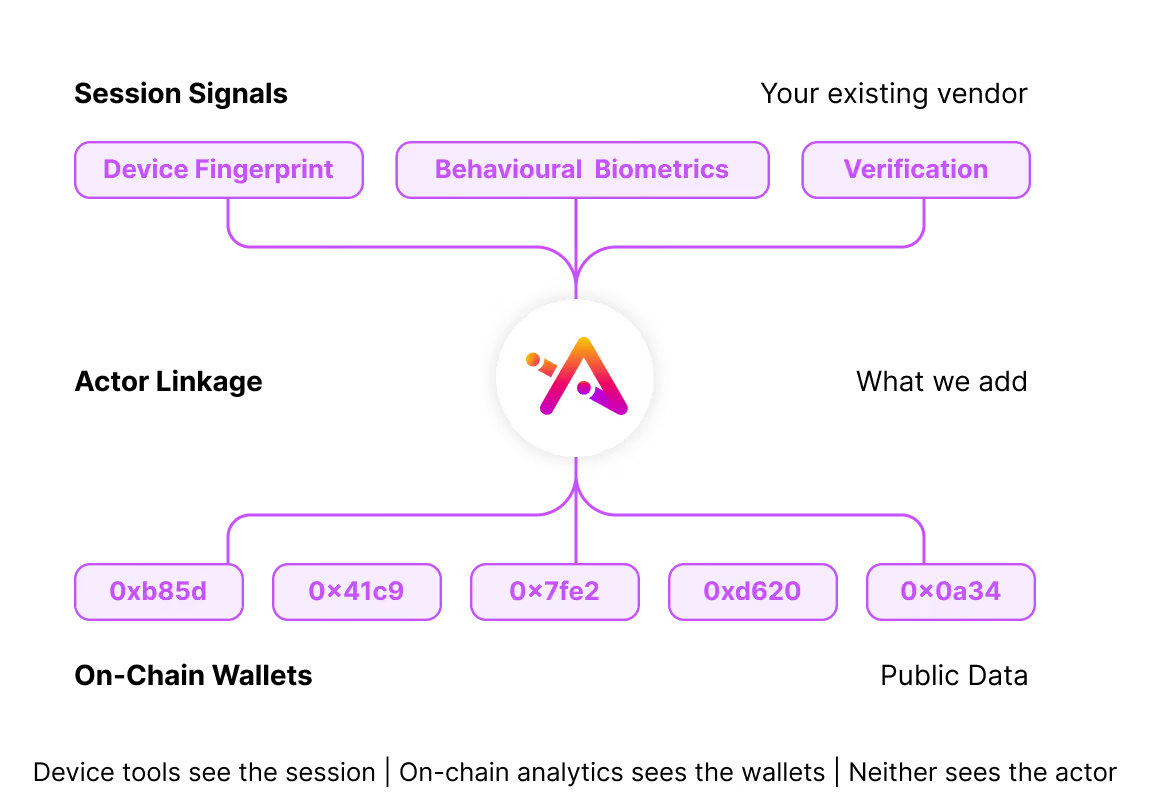
The graph pulls in every other wallet and session belonging to the same actor.
Re-score
Our rules re-run across the whole cluster, where the totals look nothing like the parts.
Classify
The pattern gets named, and independent signals have to agree before anything is flagged.
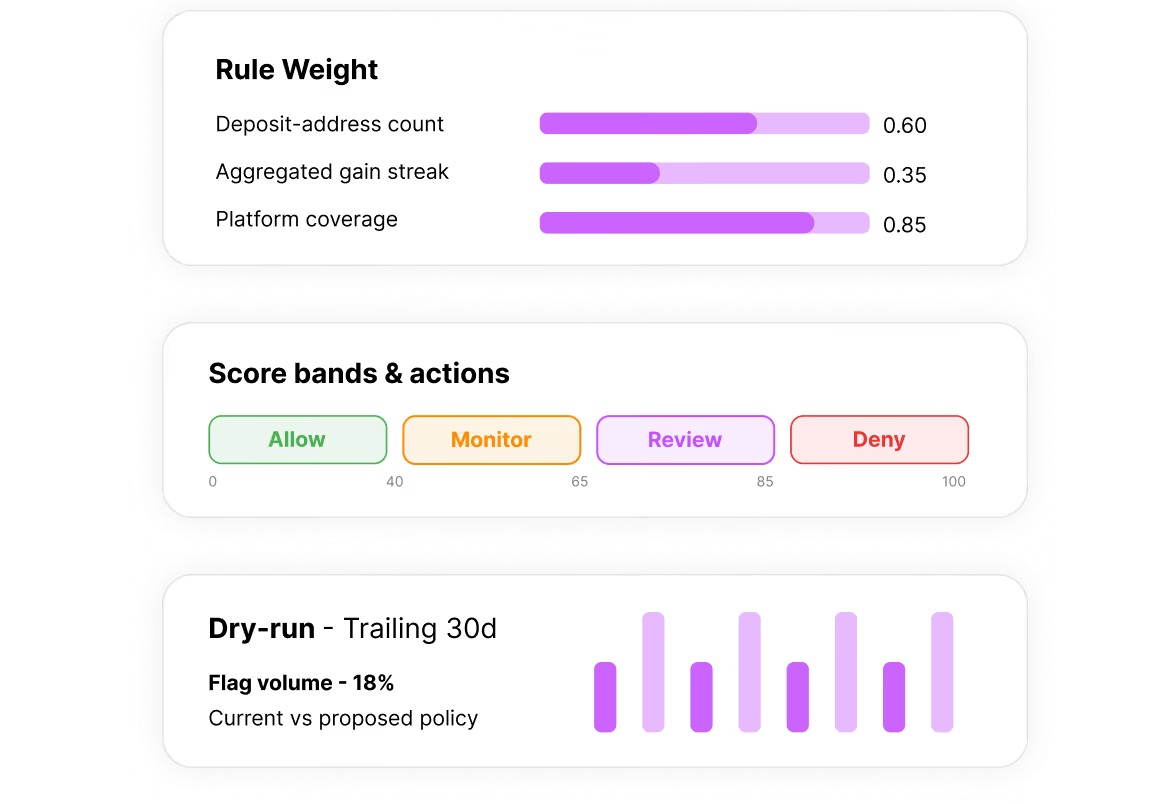
Your thresholds.
Your actions. Your call.
Test any change against the last thirty days before it goes live, so you see what it would have flagged before it flags anything.
Keep the stack
you already run
Every fraud platform has added crypto. This one was built from the chain outward.
Fraudsters work through platforms one by one. Don't be the one that pays
When an actor is flagged anywhere in the network, their risk on your platform rises the same day - before they've done anything to you yet. Your data never leaves your tenant; only the verdict travels.
Separated by contract, not by policy
Isolated infrastructure
Risk engagements run separately from any other Addressable product line.
Tenant separation
Your data never crosses into another client's environment. Only derived risk state is shared across the network.
Contractually enforced
Retention limits, deletion timelines and reuse terms written into the agreement.
Human review by default.
Uncertain cases route to your analysts instead of an automatic decision, and you configure what happens at every band. We don't perform verification ourselves, and we don't disclose our detection methodology or underlying wallet mappings.
Uncover your highest-risk users
Public deposit addresses are all we need to start. Nothing installed on your properties, nothing shared, no integration. We'll come back with the actors costing you money - the wallets, the clusters, and what they've taken.