Crypto Advertising Guide 2026: Wallet Targeting & CPW ROI




The era of "spray and pray" is over. In 2026, crypto advertising isn't about how many people see your ad; it's about how many take action.
For years, crypto marketing teams have been trapped in a measurement black box. You'd spend thousands on Twitter ads or Google campaigns, see a spike in website traffic, and then... nothing. No way to know if those clicks came from high-value whale wallets, curious tourists, or automated bots.
That playbook is obsolete.
As we move deeper into 2026, winning crypto projects are shifting from vanity metrics (impressions, clicks, CPC) to on-chain performance metrics (Cost Per Wallet, wallet-based ROAS, on-chain attribution). This fundamental shift separates successful Web3 projects from those that burn through marketing budgets with nothing to show.
This comprehensive guide reveals the exact playbook for building a precision crypto advertising engine that connects your ad spend directly to measurable on-chain revenue. You'll learn wallet-based targeting strategies, channel optimization tactics, and measurement frameworks that top Web3 projects use to achieve 321% ROAS and 40% lower cost per wallet acquisition.
1. The Core Problem: Understanding the Crypto Advertising Anonymity Gap
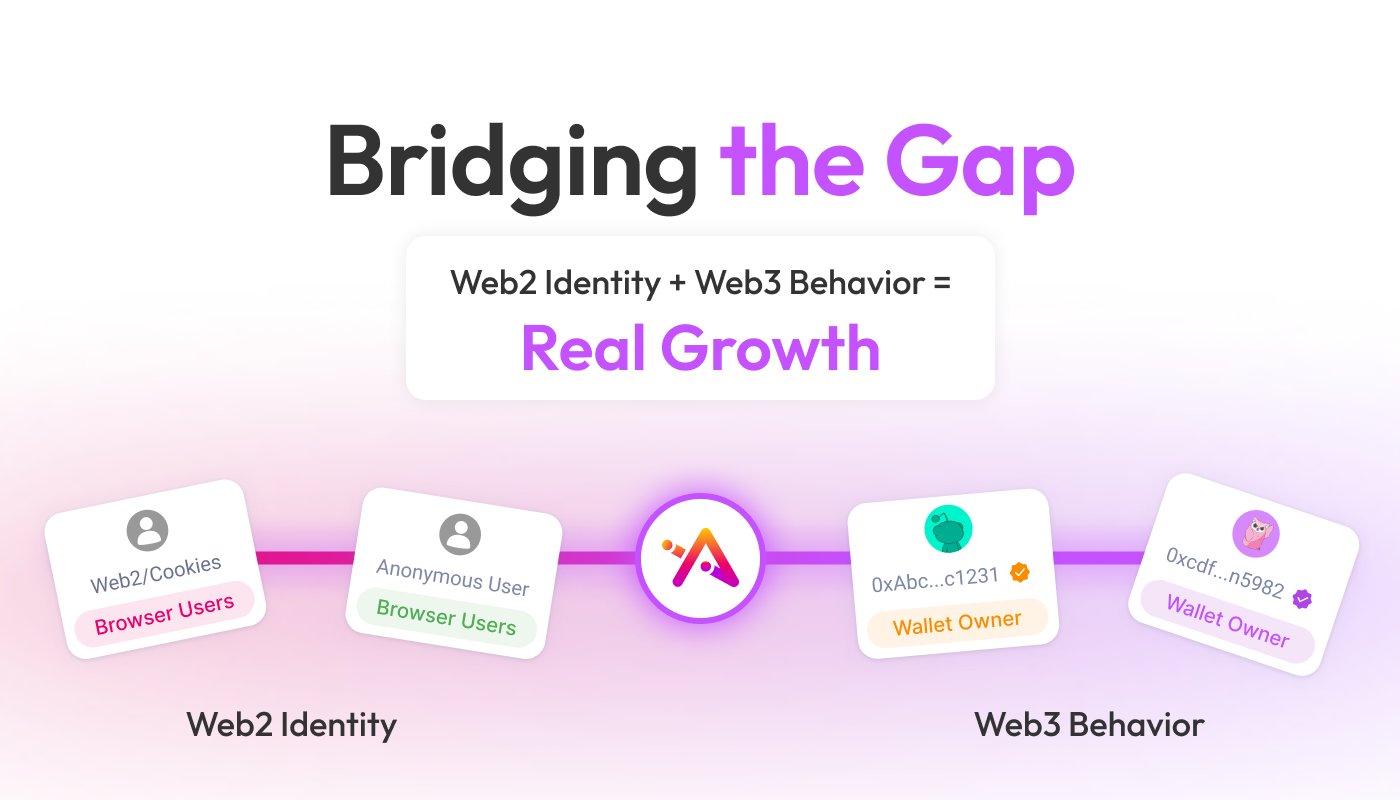
To understand why 90% of crypto advertising campaigns fail to generate positive ROI, you must first understand what we call the "Anonymity Gap", the fundamental disconnect between traditional advertising platforms and blockchain-based users.
In Web2 digital marketing, advertising relies on persistent identity. Platforms like Google and Meta know who your customer is, where they live, their browsing history, and their purchase behavior. Marketing attribution is straightforward because identity is consistent across the customer journey.
In Web3, your "customer" is a 42-character Ethereum wallet address (or equivalent on other blockchains). There's no email, no cookie, no persistent identifier that connects their on-chain behavior to their off-chain browsing.
Most advertising platforms (Google Ads, Meta Ads, X Ads) rely entirely on cookies, device IDs, and email addresses. They don't speak "wallet." This creates a fundamental disconnect: you run ads targeting "people," but your product requires "wallets" to transact.
The Solution: Bridging Off-Chain and On-Chain Identity
The first critical step in any successful 2026 crypto advertising strategy is bridging this gap. You need technology infrastructure that can match on-chain wallet behavior (what a wallet actually does on the blockchain) with off-chain user identity (where that person browses, which ads they see).
Advanced Web3 marketing platforms like Addressable accomplish this through proprietary wallet-matching technology that connects wallet addresses to advertising IDs, enabling true cross-platform tracking and attribution. This technology foundation makes everything else in this guide possible.
- Deep Dive: We explain exactly how this matching technology works in our foundational post: Addressable: How It Came to Be.
2. Defining Your Crypto Advertising Audience: On-Chain Behavior Over Demographics
Stop wasting budget on "Crypto Enthusiast" interest targeting on Twitter. It's burning your money.
Interest-based targeting finds people who read about cryptocurrency. Wallet-based targeting finds people who actively use cryptocurrency. The difference in conversion rates and ROI is staggering.
In 2026, your targeting strategy must be built on on-chain provenance, verifiable blockchain behavior that proves actual cryptocurrency usage. Build your audiences based on:
- Holdings: Users holding >$1k in stablecoins or specific governance tokens.
- Activity: Wallets that have staked, bridged, or swapped in the last 30 days.
- History: "OGs" who have been active since 2020 vs. "Newbies" who joined last month.
The Strategic Upgrade: Wallet Cohorts Replace Personas
Traditional marketing personas are based on assumptions and demographics. Wallet cohorts are based on verifiable on-chain behavior. Don't build a persona document, build a wallet cohort definition with specific on-chain criteria.
- Read More: Learn how to replace your outdated strategy in Your Web2 Plan Is Obsolete: The Web3 Marketing Strategy That Actually Works.
3. The New Crypto Advertising Metrics: Why You Must Kill CPC
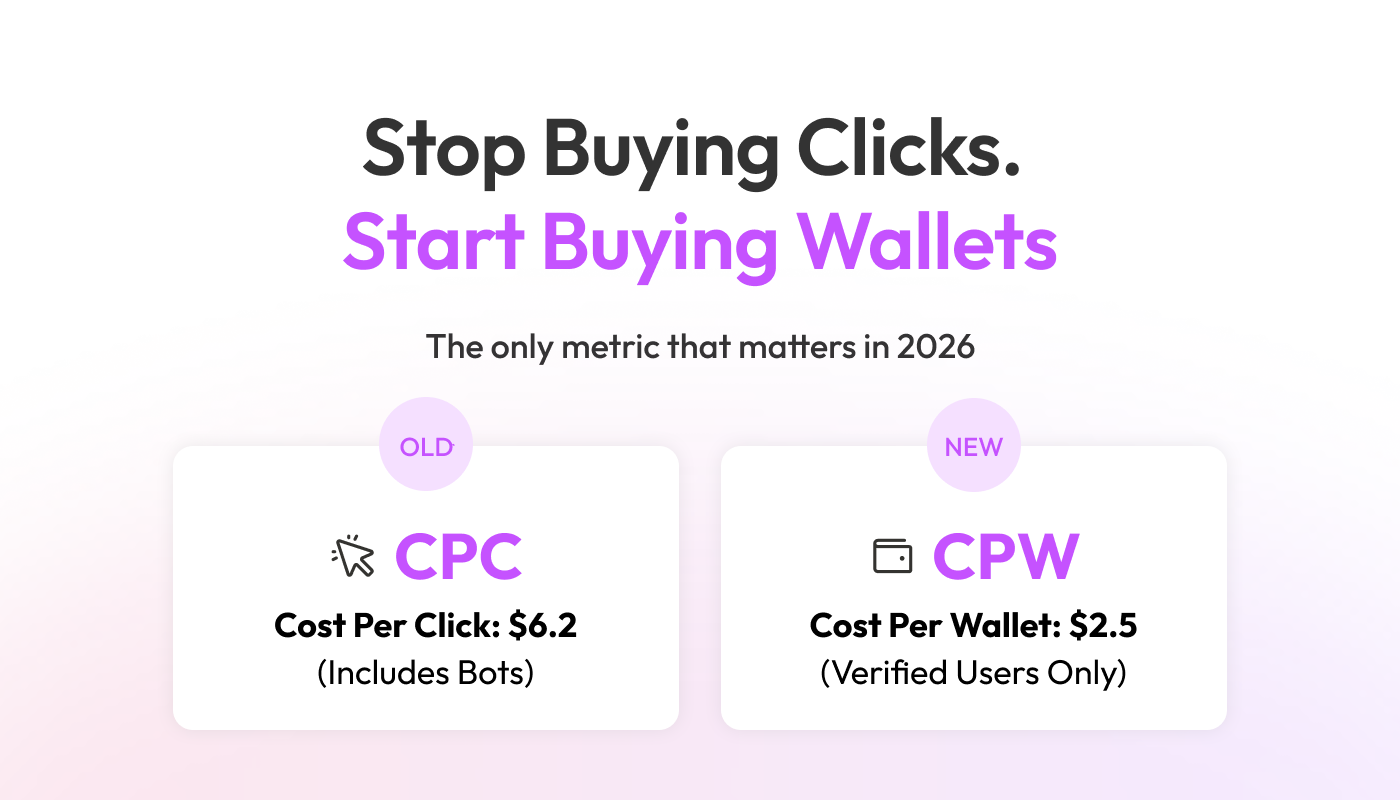
If you're still reporting Cost Per Click (CPC) to your stakeholders, you're reporting noise, not signal.
A click from an automated bot costs you the same as a click from a whale wallet holding $100,000 in crypto assets, but their lifetime value is infinitely different. CPC, CPM (cost per thousand impressions), and click-through rate (CTR) are vanity metrics that correlate poorly with actual business outcomes in crypto.
The new standard for 2026 is CPW (Cost Per Wallet).
CPW enables true ROI calculation because it connects directly to on-chain revenue. If your CPW is $50 and your average wallet lifetime value is $200, you have a sustainable, profitable acquisition model. Traditional metrics can't provide this clarity.
- Strategic Insight: See the benchmarks and data behind this shift in The Numbers Behind Cost Per Wallet (CPW).
4. Crypto Advertising Channel Strategy: Meeting Wallet Users Where They Are
Once you've defined your wallet-based audiences and established CPW as your north star metric, the next question is channel strategy: where do you reach these wallet users most effectively?
X (formerly Twitter)
The town square of crypto. But don't just boost posts. Use wallet-matched audiences to serve ads only to the wallets you care about. This turns X from a brand awareness channel into a performance channel.
Often overlooked, but Reddit is where the deepest research happens. It’s high-intent and less saturated than X. Plus, Reddit discussions feed directly into AI models like ChatGPT, meaning your ads there help you "rank" in the AI era.
- Tactical Guide: Learn how to execute this in Hacking Growth with Reddit Ads.
The Open Web (Display)
Programmatic display ads allow you to follow your target wallets across the entire internet, not just when they are thinking about crypto on Coindesk, but when they are reading the news or browsing lifestyle sites.
5. The Secret Weapon: Wallet-Based Retargeting for Crypto Projects
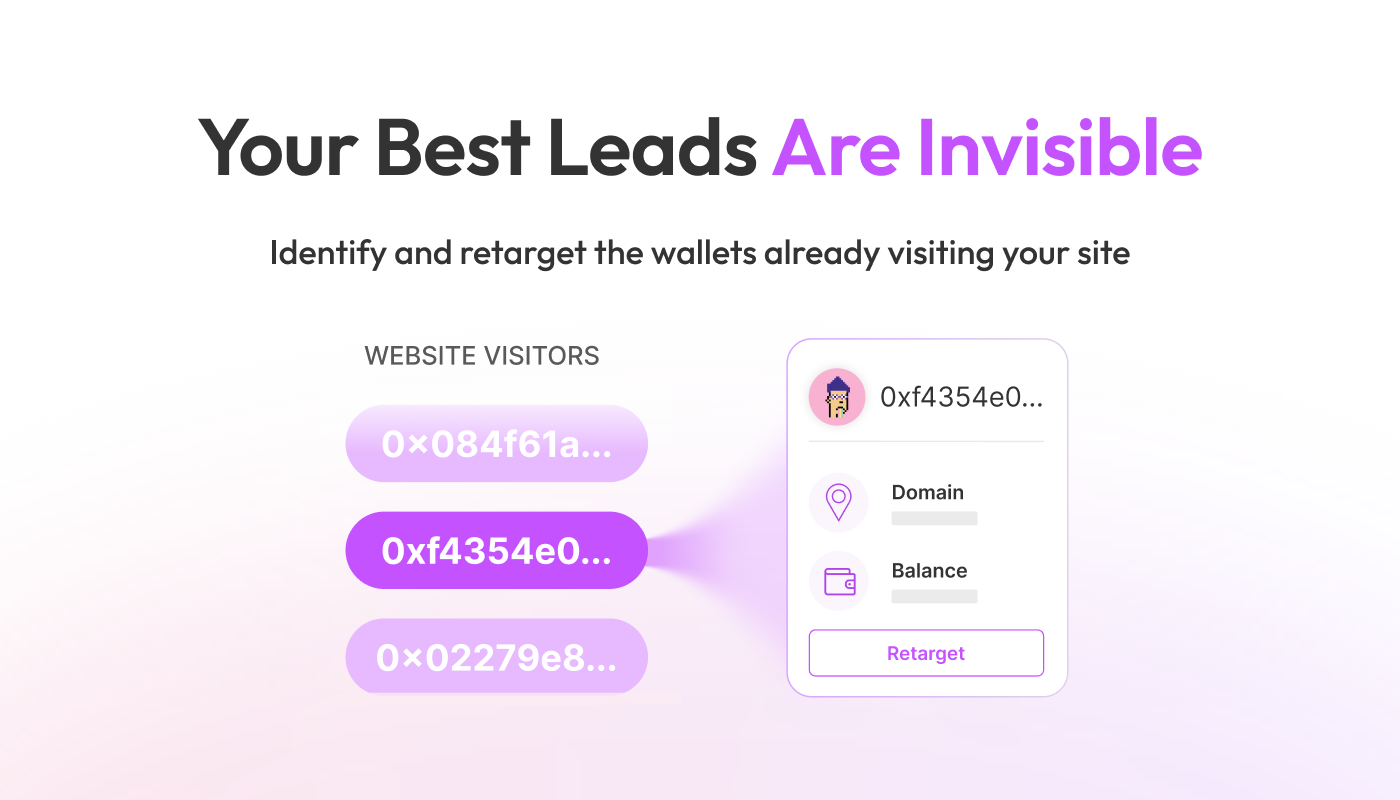
Here is the biggest leak in your funnel: 98% of your website visitors leave without connecting their wallet.
In Web2, you would retarget them. In Web3, most teams just let them go.
How Wallet-Based Retargeting Works
Wallet-Based Retargeting changes this dynamic entirely. By identifying the wallet addresses of users visiting your site, even if they don't explicitly connect, you can serve highly specific retargeting ads to bring them back and complete the conversion.
Implementation examples:
- User visited your "Staking" page but didn't stake? Show them a targeted ad highlighting your current APY rates and staking rewards.
- Wallet connected to your dApp but didn't deposit funds? Retarget with a limited-time gas rebate offer or deposit bonus.
- User explored your NFT marketplace but didn't mint? Show them ads featuring the most popular collections or upcoming drops.
This is consistently the highest ROI activity for our partners, driving returns as high as 321% ROAS.
- Case Study: See how this works in Introducing Wallet-Based Retargeting.
6. The Essential Crypto Marketing Tech Stack for 2026
You cannot execute this strategy with spreadsheets and Google Analytics. Modern crypto advertising requires a specialized tech stack that provides visibility across both on-chain and off-chain activity.
- On-Chain Vision: Tools like Dune and Nansen show you what is happening on-chain.
- Growth Engine: Addressable connects that on-chain data to off-chain ads to actually drive the action.
- Full Stack Guide: We reviewed the top tools in The Best Crypto Analysis Tools in 2025 (and How to Actually Use Them).
Conclusion: The Signal is On-Chain—Build Your Competitive Advantage
The difference between a failed crypto project and a unicorn in this cycle won't be determined by the underlying technology, it will be determined by go-to-market execution and distribution efficiency.
The teams that win will be those who stop treating crypto advertising as a guessing game and start treating it as an engineering problem with measurable inputs and outputs. They will:
- Target specific wallet cohorts based on verifiable on-chain behavior, not demographic assumptions
- Measure success by Cost Per Wallet and on-chain ROAS, not clicks or impressions
- Implement wallet-based retargeting to capture the 98% of visitors who don't connect on first visit
- Deploy across multiple channels (X, Reddit, display) with consistent wallet-based targeting
- Build their stack on platforms that bridge on-chain data with off-chain advertising execution
The infrastructure to execute this strategy exists today. The question is no longer whether wallet-based advertising works because the data proves it does, with documented ROAS improvements of 200-300% over traditional approaches.
The question is whether you'll implement it before your competitors do.
Ready to stop guessing? Start targeting real wallets today.