How to identify high-value users before they deposit



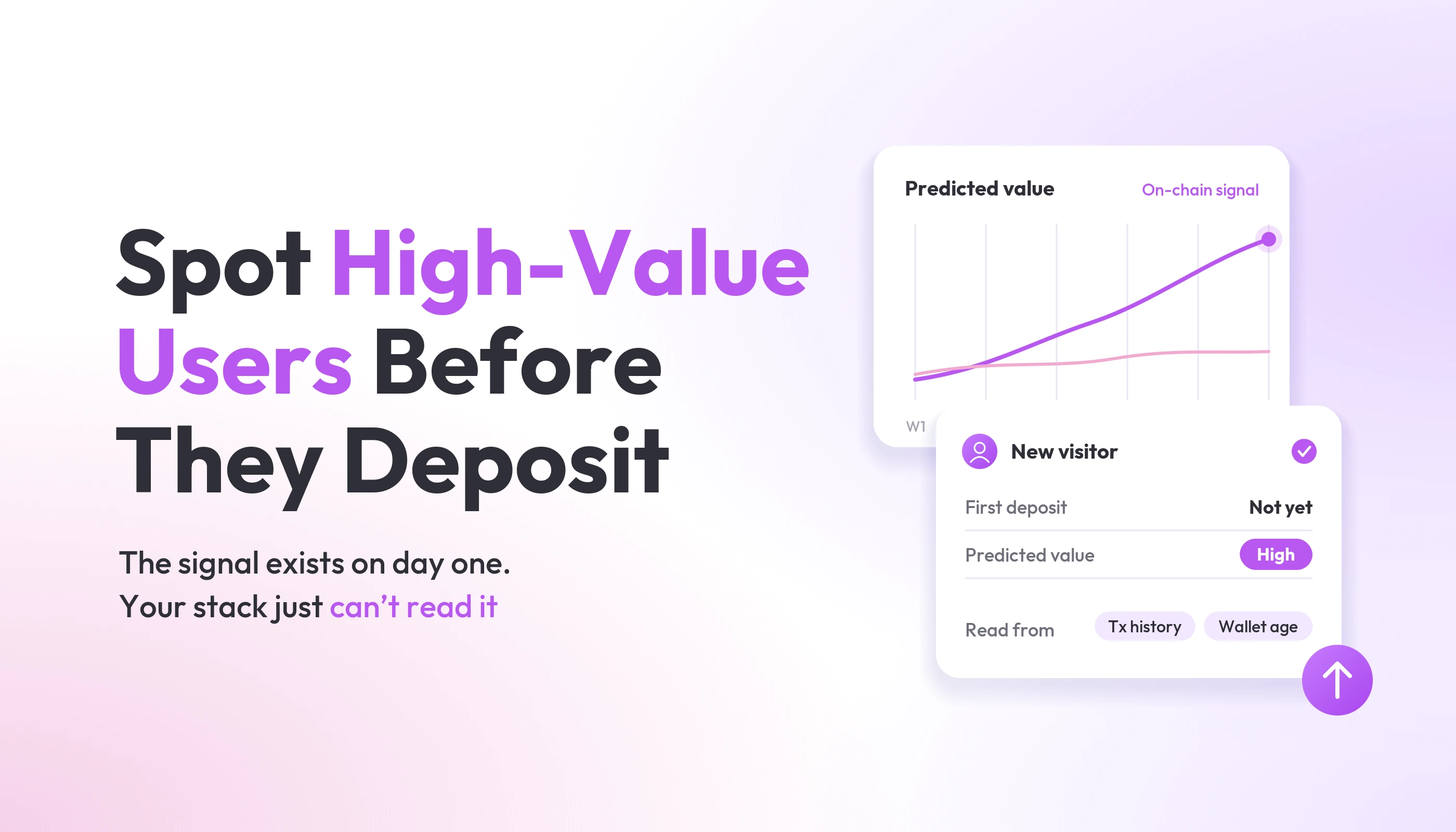
You can identify high-value users before they deposit by matching anonymous visitors against on-chain activity: their transaction history, their activity on other platforms and how long their wallets have been active. That signal exists on the first visit. Most platforms instead wait months for their own behavioural data to say the same thing.
Why do most platforms find their best users in month three?
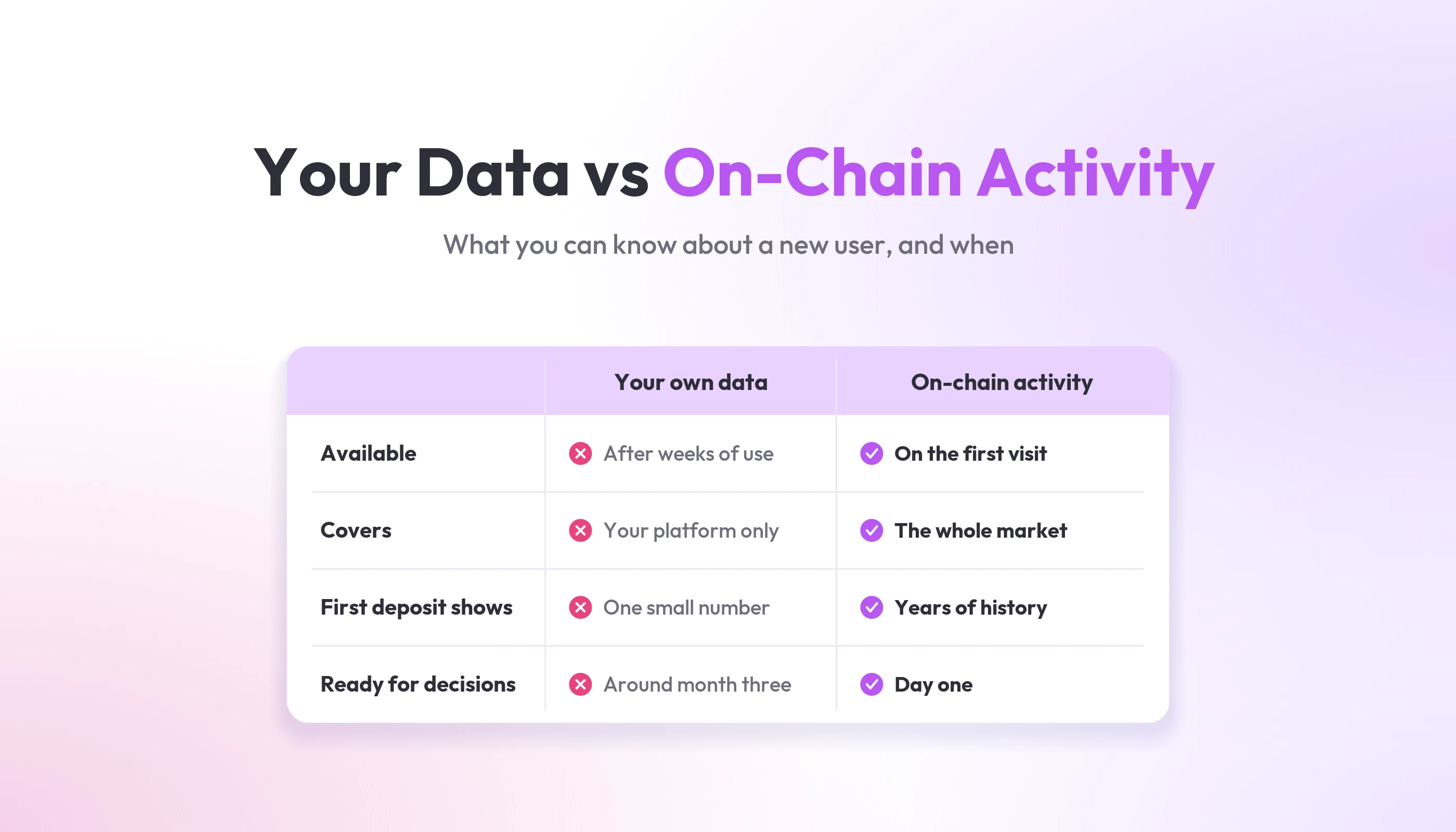
Most crypto and iGaming platforms find their best users late because their data only starts on the day a user arrives. Deposits, sessions, trades and retention take weeks to build up, and lifetime value models need that history before they say anything useful. By the time a model flags a user as high value, it is often month three.
That delay is expensive because value is concentrated. On most platforms, a very small group, often less than 1% of users, drives a disproportionate share of revenue. Those users arrive through the same ads, see the same onboarding, get the same welcome offer and wait in the same support queue as everyone else.
So the decisions that shape a user's first weeks are made blind:
- Acquisition. The ad platforms bid the same for a visitor who will be worth thousands as for one who signs up and never returns.
- Onboarding. Everyone gets the generic flow, so the users most worth a personal welcome rarely get one.
- Attention. Account managers and support teams only learn who matters after the early, decisive weeks have passed.
The usual response is to build a better model on top of the same data: more features, more history, a smarter algorithm. It helps at the margins, but it cannot fix the timing. A model that learns from what users do on your platform still has to wait for them to do it.
The fix is not a better model of your own data. It is reading a signal that already exists before the user ever reaches you.
What can your own data tell you, and what can't it?
Your first-party data is good at describing what users do on your platform, once they have done it. At the first visit, it says very little about value.
| Signal | Available at the first visit? | What it tells you about value |
|---|---|---|
| Traffic source and campaign | Yes | Where the visitor came from, not what they are worth |
| Device, country, language | Yes | Context, but a weak value signal on its own |
| Sign-up form fields | At sign-up | What the user chooses to tell you |
| First deposit amount | After the deposit | One data point, often a test amount |
| Behaviour over 30 to 90 days | Months later | Reliable, but too late for the first decisions |
The first deposit is the trap. Many experienced users start small to test a new platform, so the size of a first deposit says little about what comes next.
Take an illustrative example. A new user makes a first deposit of $250. On your own data, they look like an average new user and get the average treatment. Their wallets, though, show more than $100,000 of on-chain activity across other platforms over the past two years. Your platform sees $250. The rest of the picture sits outside your systems.
This is not a data-quality problem you can solve with a better CRM. Your CRM can only store what happens on your platform, and a new user has no history there yet. To predict user value before the first deposit, you need a source that already holds the user's history, and for crypto and iGaming that source is the blockchain.
Which signals let you identify high-value users before a deposit?
The strongest early signals sit on public blockchains, where activity is recorded long before a visitor reaches your site. Read together, they describe how a visitor behaves across the whole market, not only on your platform.
- Transaction history. How much activity the visitor's wallets show, how often, and how consistently over time.
- Activity on other platforms. Whether the wallets are active on exchanges, DeFi protocols, casinos or sportsbooks, and how recently.
- Wallet age. How long the wallets have been active. Years of steady activity mean something different from a wallet created last week.
- Asset mix. Which assets and chains the wallets use, which says a lot about how experienced the user is.
- Recency and direction. Whether activity is growing, steady or fading.
None of this needs the visitor to deposit, sign up or fill in a form. It needs the visitor to be matched to on-chain activity. Addressable does this with a tag on your site, drawing on 130M+ matched users and around 2 billion tracked wallets, and returns a value signal you can act on. The matching happens at the level of visitors and wallets; your team receives a predicted value tier, not a dossier.
What makes these signals useful is that they are hard to fake and slow to change. A visitor can type anything into a sign-up form, but years of on-chain activity across several platforms cannot be invented the day before a deposit. That is why early high-value user detection built on on-chain data holds up better than models built on the first few clicks.
The Segmentation page explains how high value user identification works in practice.
Why do you have to score the whole cluster, not one wallet?
You have to score the whole cluster because almost nobody keeps everything in one wallet. Experienced users spread activity across several addresses: one for trading, one for holding, one for a new platform they are trying out. The wallet they use with you is often the newest and emptiest.

Score that wallet alone and you get the wrong answer. In the illustrative example above, the connected wallet might show a few hundred dollars, while the user's other wallets carry almost all of the activity. A single-wallet score puts that user in the bottom tier.
A cluster is the set of wallets linked to the same user through on-chain behaviour and shared signals. Scoring the cluster gives you the user's full activity across the market, which is what predicts value.
Two things make cluster scoring reliable. First, links between wallets come from several independent signals, not one guess, so a single coincidence does not merge two unrelated users. Second, the score weights consistent activity over time more than one large transfer, so a wallet that received a one-off payment does not jump to the top tier. The result is a ranking you can act on, rather than a list of outliers. We go deeper on why value hides across addresses in one user, many wallets.
What should you do with the answer on day one?
Once you know which new users are likely to be high value, three decisions change on day one.
- Prioritise. Route likely high-value users to account management or a faster support lane from the first session, not from month three. The early weeks are when experienced users decide whether a platform deserves more of their activity.
- Personalise. Adjust onboarding to what the user already knows. Someone with years of activity on other exchanges does not need a beginner's tutorial; they need the features and limits that matter to an experienced user.
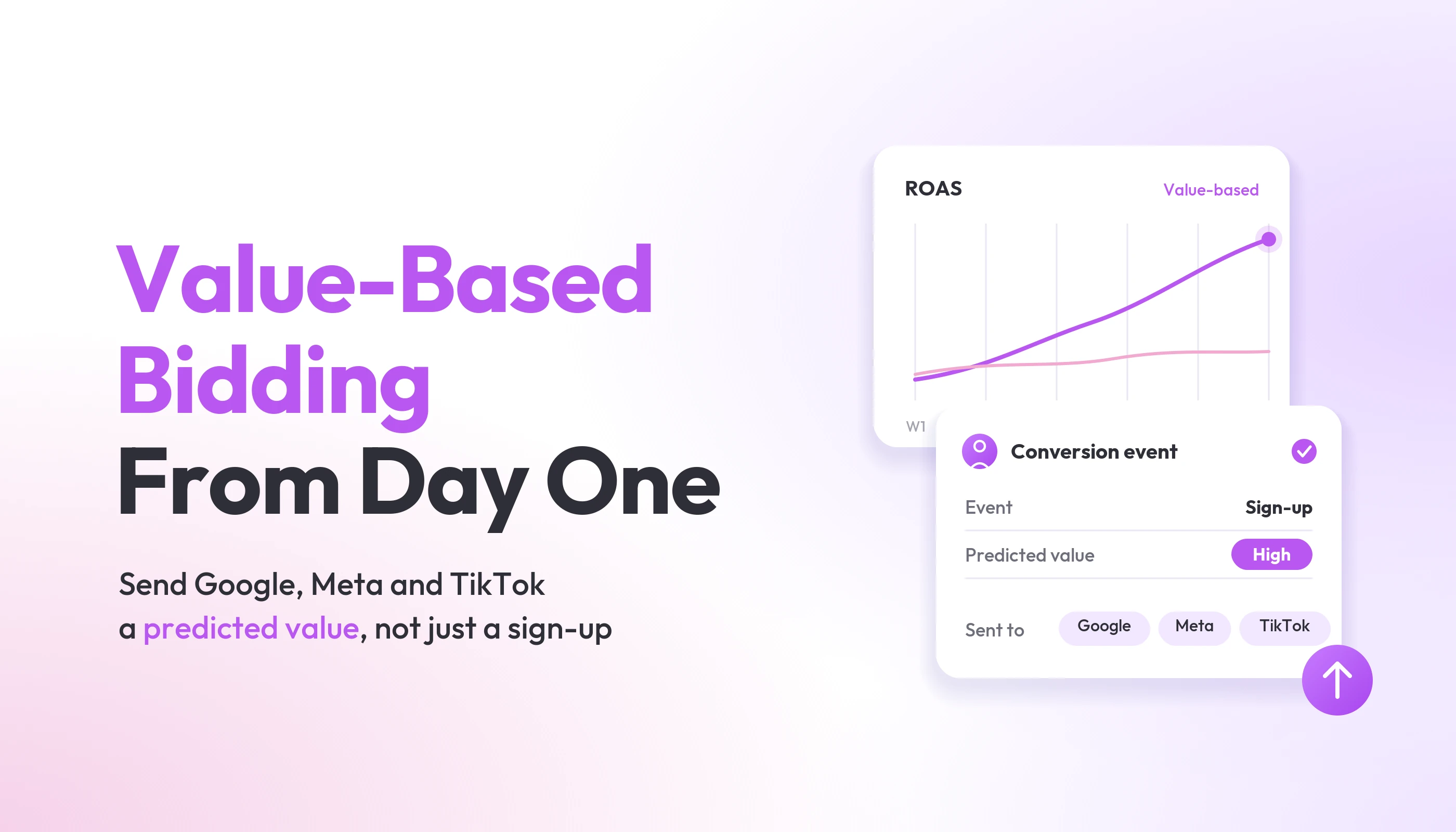
- Bid. Send the predicted value to your ad platforms, so Google, Meta and TikTok bid for more users like the high-value ones instead of the cheapest sign-ups. Our guide to value-based bidding shows how to set it up, and why LTV models alone can't see new users.
There is a fourth, quieter benefit: you stop over-serving low-value sign-ups. Welcome offers, onboarding calls and acquisition budget are finite. Knowing who is likely to be high value on day one also tells you where the generic, automated flow is enough.
Each of these works with the tools you already have. The value signal arrives as a score or a tier, not as raw financial data, so it fits into a CRM field, a routing rule or a conversion event.
How do you test it on your own traffic?
The simplest test runs alongside your current setup and changes nothing until the results are in.

- Add the tag. Install the tag on your site so new visitors are matched to on-chain activity.
- Score quietly for two to four weeks. Let every new visitor receive a predicted value tier while your team works exactly as before.
- Wait for real outcomes. After 30 to 60 days, compare each user's predicted tier with what they actually deposited and how active they stayed.
- Check the top tier. If the users predicted as high value are the ones who turned out to be, the signal holds on your traffic.
- Act on one decision first. Start with routing or bidding, measure it against a control group, then add the next. For bidding, run it as an A/B test against your current strategy. Clients sending predicted value have seen 10–20% higher ROAS by Day 60.
What good looks like: the top tier should hold a clearly larger share of later deposits and activity than its share of users, and the gap should be visible within the first 60 days. If it is, early high-value user detection is working on your traffic, and every week you wait costs you the users who were worth noticing on day one.
Terms used here are defined in our on-chain growth glossary.
FAQ
Is this the same as a lifetime value model?
No. A lifetime value model predicts value from what a user has already done on your platform, so it needs weeks of history. Identifying high-value users before they deposit uses on-chain activity from before they arrived. The two work well together: the early signal covers the first weeks, and your LTV model takes over once your own data builds up.
Do users need to connect a wallet first?
No. The tag matches anonymous visitors to on-chain activity on the first visit, before sign-up or a first deposit. A wallet connection, when it happens, adds more signal, but it is not required. That matters because most visitors never connect a wallet, and the decisions that count happen before they would.
Does this work for iGaming as well as crypto platforms?
Yes. The signal is the same: on-chain activity across exchanges, DeFi, casinos and sportsbooks. A crypto casino uses it to prioritise new users and tailor onboarding. An exchange or broker uses it to route new accounts and bid for more users like its best ones. What changes is the decision you act on, not the signal.
What data do we actually receive?
You receive a value score or tier for each matched visitor, ready to use in a CRM field, a routing rule or a conversion event. Financial details are inputs to the model, not fields that are handed over. Your team sees which new users are likely to be high value and acts on that, without handling raw on-chain data.
How quickly can we see results?
Scoring starts as soon as the tag is live. Most teams let it run quietly for two to four weeks, then compare predicted tiers with real outcomes after 30 to 60 days. If the top tier holds, routing and onboarding changes can go live straight away, and bidding tests usually read clearly around Day 60.